Design Operations
From an Internal Design Framework to a Public Resource
What began as an effort to improve how product teams approached discovery evolved into an internal design framework, an interactive prototype, and eventually a public resource for research, design, and implementation methods.
The limits of a solution-first initiative process
At my previous company, significant product initiatives went through a regularly-scheduled approval process to secure executive sign-off (funding and resources). Initiative owners, typically Product VPs or Product Managers, prepared business cases for review by executive leadership. These documents were expected to establish the business problem, desired outcomes, proposed scope, and a rough order of magnitude (ROM) for implementation.
While the process called for t-shirt-sized estimates, the expectation often resembled a more developed level of estimation or at least clear outcomes and deliverables. That presented a bit of a challenge at times. Teams were being asked to provide meaningful implementation estimates and details before they had adequately investigated the problems they intended to solve, much less determined what the solutions should be.
Preparing an initiative could involve weeks or months of gathering requirements, coordinating conversations across departments, and collecting estimates from technical teams. Much of this happened before a formal discovery effort had been approved or conducted.
The approval process served a legitimate business purpose, but it wasn't particularly well suited to initiatives where substantial research was necessary to establish the problem and inform the eventual solution.
Making room for research before implementation
That need became particularly apparent while discussing and planning a major Chapter 13 bankruptcy plan-tracking initiative involving an integration with the major third-party partner.
The opportunity originated with our SVP of Product Strategy. As the lead product designer, I worked closely with them, the product manager, our lead engineering architect, and the third-party partner leadership and development team to investigate the opportunity before committing to an implementation plan.
During that initial research and discovery period, I took on responsibilities that extended beyond traditional product design deliverables. I organized and facilitated Lean UX workshops, coordinated weekly working sessions, and established a small client advisory board of existing application users who could participate in interviews and usability testing.
The intention was to develop a shared understanding of the opportunity, investigate actual client workflows, challenge our assumptions, and establish which problems were worth solving before defining what we would build.
Having organizational support to conduct that work upfront demonstrated the value of separating discovery from implementation planning. And it was only a ~7-week period on a rather complex topic. Lots of times research and discovery are just conducted and absorbed, staggered with a development sprint cycle as it's own research or elaboration sprint. That's a great model for feature improvements, bug fixes, small enhancement validations, dev sprint pivots, etc. But often, teams don't get the bandwidth allocation or additional resources for more involved and structured research around 0-1 projects.
Based on what we'd aconplished and learned during the Ch. 13 project, I proposed establishing a dedicated Research Initiative protocol, which we pitched internally as a pre-initiative. Our SVP of Product Strategy advocated for the approach with executive leadership, and it was subsequently introduced as an option in the organization's initiative approval process.
Rather than requiring teams to present a sufficiently defined solution and implementation estimate, a Research Initiative could seek executive approval for the work necessary to investigate the problem. Its proposed scope could identify research objectives, planned activities, participating teams, resource needs, and expected deliverables.
Traditional implementation initiatives would continue through the established approval process once sufficient research and planning had been completed.
While the process created a path for more deliberate discovery, its adoption varied as teams navigated evolving priorities and organizational changes.
The change didn't remove the need for accountability. It gave larger research sets its own basis for approval, recognizing that investigating a problem and implementing a solution are different kinds of work with different levels of uncertainty.
Approval to research wasn't the same as knowing how to research
Establishing a Research Initiative process addressed one problem, but subsequent projects exposed another.
Product teams now had a path to request approval for upfront discovery, yet determining what should go into those requests wasn't necessarily straightforward. Teams still needed to identify which research activities were appropriate, what questions those activities should answer, and what tangible outcomes or deliverables an executive sponsor could expect.
The challenge had moved from obtaining permission to conduct research to understanding how to plan and structure it and keep the end users front and center.
Around the same time, I was also refining how our design team documented and accounted for its work. I introduced a standardized Confluence project template within our Design Operations space to give designers a consistent place to capture design estimates, meeting notes, research activities, design deliverables, and stakeholder sign-offs.
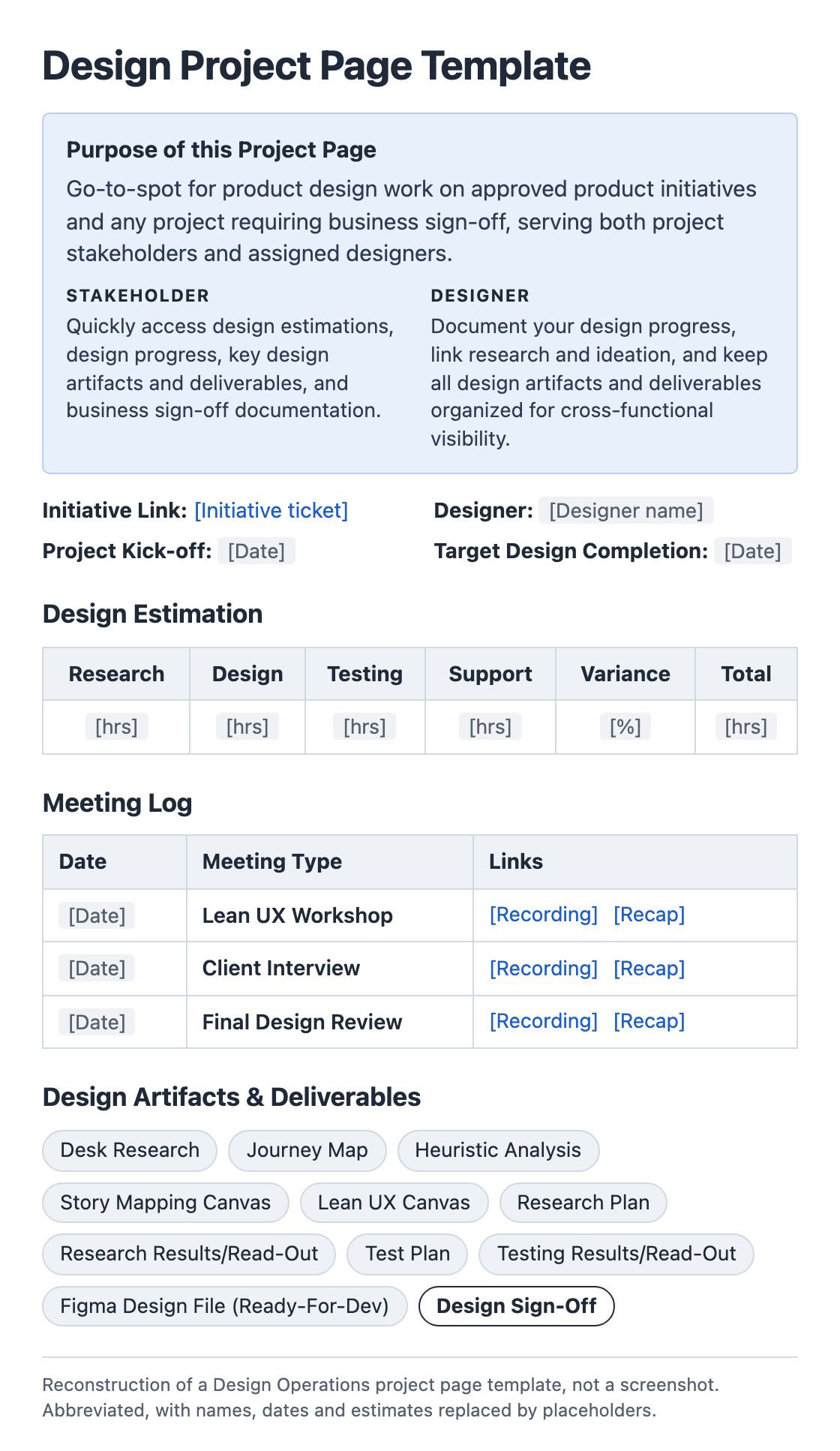
Figure 1. A reconstruction of the Design Operations project page template, abbreviated and redrawn without names, dates or the original application interface. Hours and dates are placeholders.
Beyond improving visibility and accountability, I wanted that documentation to become useful historical data. By capturing estimated effort against the work performed on individual projects, we could begin establishing more reliable planning benchmarks. The intention wasn't necessarily to make design work faster, but to estimate it more accurately, anticipate resource needs, and reduce the risk of scope creep as initiatives progressed.
Some teams were familiar with competitive analysis, customer surveys, or feedback gathered through Marketing and Client Success. Those were valuable inputs, but complex product opportunities often required a broader set of methods to investigate user behavior, understand workflows, evaluate assumptions, and test potential solutions.
The framework intended to provide practical guidance across those activities. My initial focus was creating something my product design teammates could use with their teams. Really though, Product Managers, Product Owners, and/or Lead Designers could use it to evaluate where an initiative stood, determine what remained uncertain, and identify methods that would help them progress toward the next informed decision.
The framework would also clarify where design could contribute throughout research and implementation, rather than treating design involvement as something that began once requirements and solutions had already been established.
A framework for moving from uncertainty to implementation
In 2025, around other projects, I began translating those needs into a visual framework in FigJam, a shared digital white-boarding tool. The goal was to provide a common reference that anyone involved in planning or advancing an initiative could use to understand where they were, what they still needed to learn, and which research or design activities might help them move forward.
I organized the framework around two tracks that reflected the distinction we'd established in the initiative approval process: Research: Scope Unknown and Implementation: Scope Known.
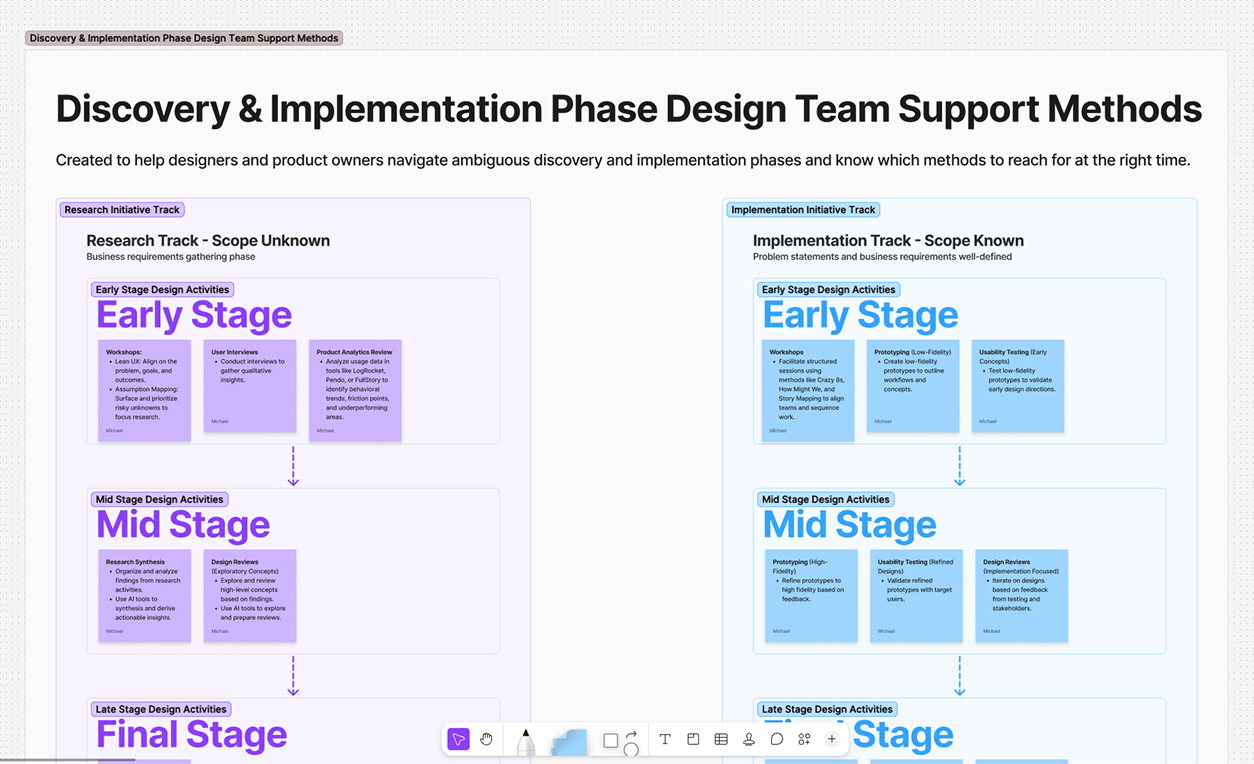
Figure 2. The original FigJam version of the framework.
Each track was divided into early, middle, and later stages, with methods and activities relevant to the type of work being undertaken. The Research track emphasized understanding problems, gathering evidence, and evaluating assumptions. The Implementation track focused on designing, testing, refining, and preparing solutions for delivery.
The framework wasn't intended to prescribe a rigid sequence of activities. Teams could enter at different points depending on what they already knew, revisit earlier methods when new questions emerged, or select activities that addressed a particular knowledge gap. The objective was to make the available methods easier to understand and apply, while giving a team a shared vocabulary for discussing what should happen next.
It offered a practical way to connect an initiative's current state with appropriate research and design support, including the activities and expected outcomes that could inform subsequent decisions.
Revisiting the framework with Figma Make
After being laid off in early 2026, I revisited the FigJam framework and began considering whether it could be useful beyond its original audience. The underlying methodology was still relevant, but the format had its limitations. Navigating a large FigJam board wasn't necessarily the most approachable way for someone to find an appropriate method or understand how to apply it.
I decided to experiment with Figma Make to see how the framework might translate into an interactive resource. Using the original FigJam board as a reference, I provided a prompt describing the intended application with relatively little visual direction, then began refining the generated experience.
The resulting prototype retained the original Research and Implementation tracks while introducing more approachable ways to explore the methods. Make nailed it pretty close out of the gate, but it definitely took some refinements and subraction of bloated design, that AI loves to inject. Users could navigate stages, review prerequisites and expected outcomes, identify recommended follow-on activities, and find methods based on what they were trying to accomplish. I also began exploring how AI might support the preparation and execution of individual activities.
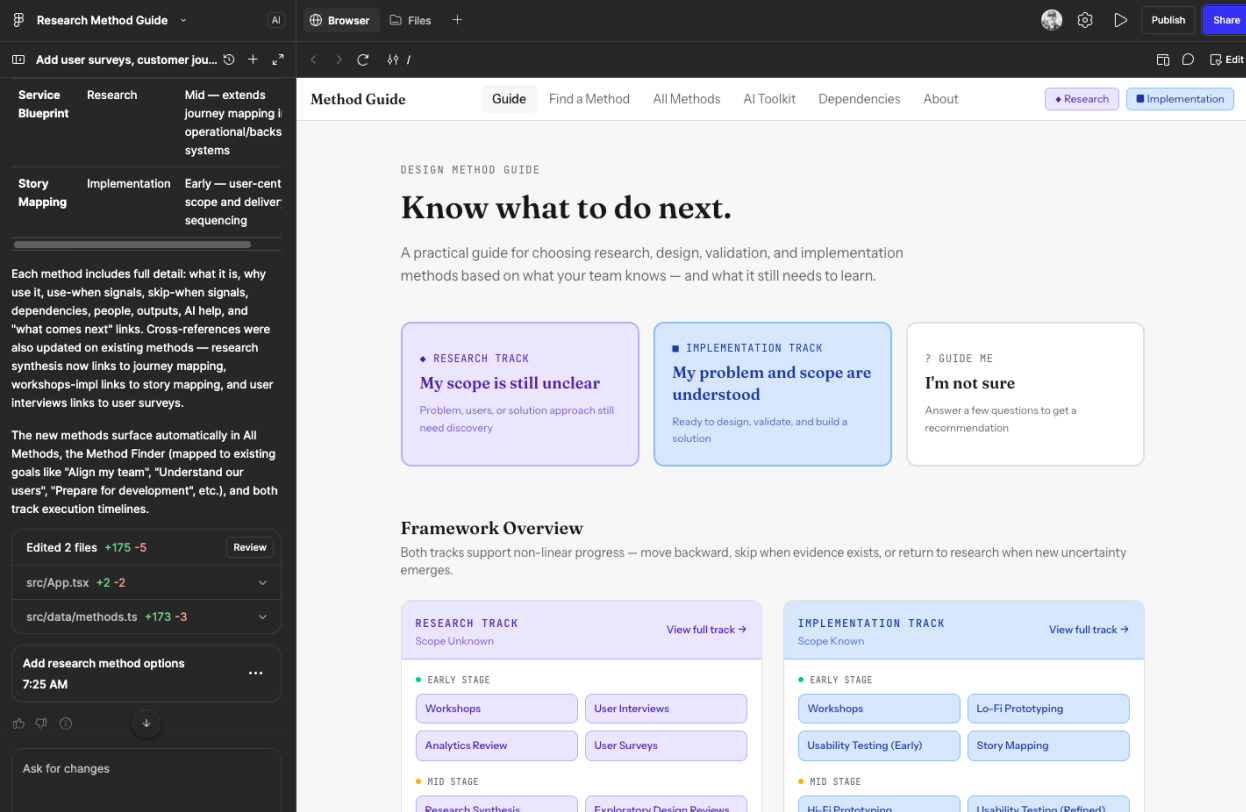
Figure 3. The first prototype of the interactive guide, built in Figma Make.
Using Make gave me an opportunity to take a framework developed around a specific organizational need and make its underlying knowledge more accessible and interactive for practitioners working in different environments.
From prototype to public resource
With the interactive prototype established, I decided to bring the Methods guide into my personal portfolio at whitaker.design. Rather than maintaining a separate Figma Make application, I wanted the resource to become part of my broader design practice and something I could quickly access or maybe other people could freely access and use.
I used GPT and Claude Code to help bring the prototype into the existing website architecture, adapting the visual design to the whitaker.design brand while preserving the original methodology and interactions. The migration wasn't entirely straightforward, but leveraging my AIOM starting with Coordinator.md set things in motion. Even still, some of the interactions and styling needed additional refinement, particularly around accessibility, responsive behavior, navigation, and consistency with the rest of the site. Good notes for continued design system improvements and the way my agents are engaging it.
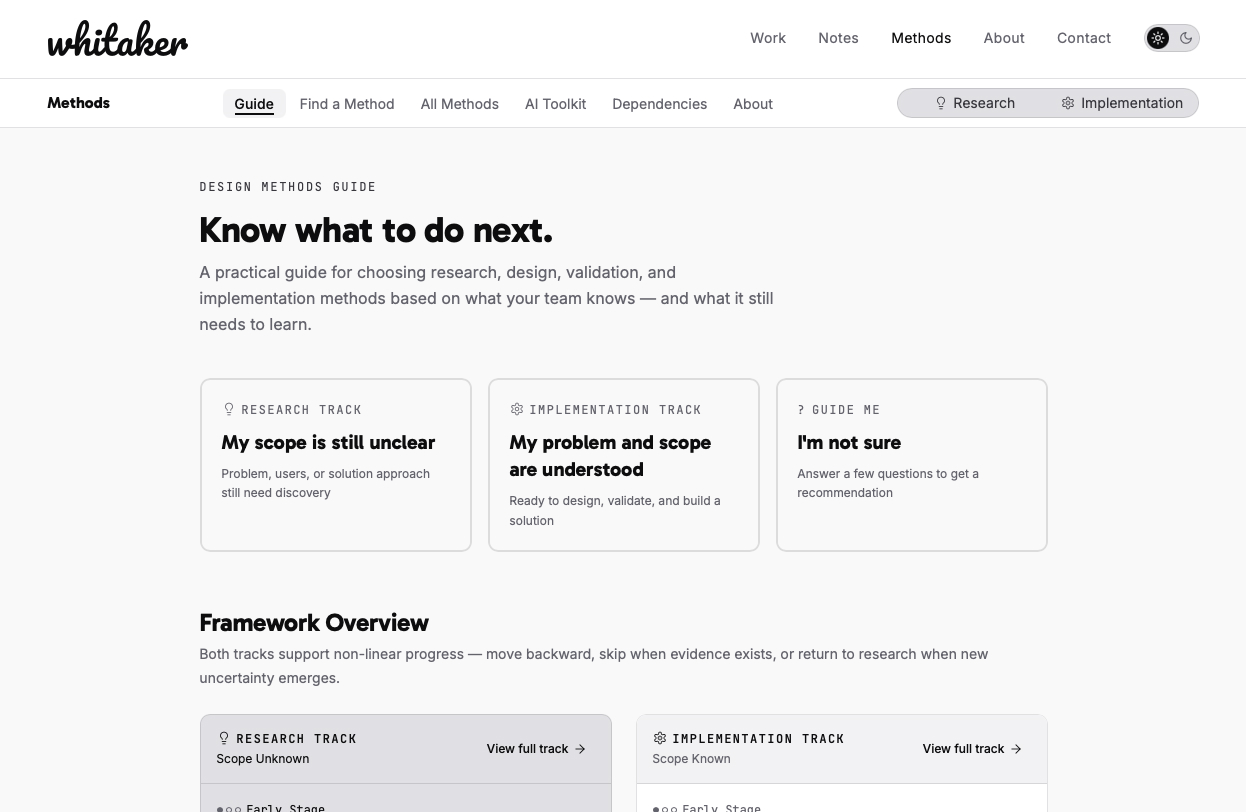
Figure 4. The public version of the guide on whitaker.design.
I expanded the library from what I had started with in Figjam to include additional research, design, and evaluation methods, with guidance around prerequisites, expected outputs, dependencies, and recommended follow-on activities. I also brought the AI Toolkit over from the Figma Make prototype, with guidance on how AI can assist with workshop planning, interview preparation, research synthesis, and other activities without replacing the research or judgment behind them.
I've continued exploring practical templates and reusable AI prompts to help someone move beyond identifying a method to actually preparing and conducting the work.
The goal is for Methods to be more than a catalog of techniques. Someone should be able to arrive with a problem, find a useful starting point, understand what the work involves, and determine where to go once they've completed it.
Continuing the work
Looking back, this started with a specific organizational problem: how to make room for meaningful discovery before committing resources to implementing a solution.
Establishing the Research Initiative process addressed part of that problem. The FigJam framework addressed another. Figma Make gave me a way to explore a more interactive format, and subsequently bringing Methods into my portfolio opened it up to an audience beyond the organization where it started.
I'm continuing to build on it as I find opportunities to make the guide more useful. Feedback always welcome!
Additional resources
Here are some other resources and UX methods sources I've pulled from over the years to help compile this Methods project.
- Nielsen Norman Group: When to Use Which User-Experience Research Methods (opens in a new tab)
- UX Methods (opens in a new tab)
- User Interviews: UX Research Methodologies (opens in a new tab)
- Baymard Institute: UX Research Methods, Which to Use and When (opens in a new tab)
- MeasuringU: The Methods UX Professionals Use (2024) (opens in a new tab)